One Idea, Many Different Ways to Run It
Ask ten people in Accra, Lagos, Kano or Nairobi how their susu works, and you may get ten different answers.
One collects small amounts every day from market traders. Another gathers friends monthly and hands the full pot to one person each round. A third helps members save toward a goal, and a fourth lends money back to the group.
They are all "susu," yet they're run quite differently. And that matters, because the right susu management software should fit the way you operate, not force you into someone else's system.
If you're searching for susu software in Ghana, Nigeria or anywhere in Africa, the first step is knowing which type of susu operation you run. This guide walks through the most common types across the continent, then shows how Susu-CRM gives you a platform suited to your own operation.
First, a Quick Note on Names
Susu goes by many names depending on where you are. In Ghana and parts of West Africa it's susu. In Nigeria, you'll hear esusu or isusu (Yoruba and Igbo), ajo (Yoruba, often for daily contributions) and adashe (Hausa) among other countries as well.
The names change, but the heart is the same: people pooling money together, built on trust.
Now let's look at how these operations actually work.
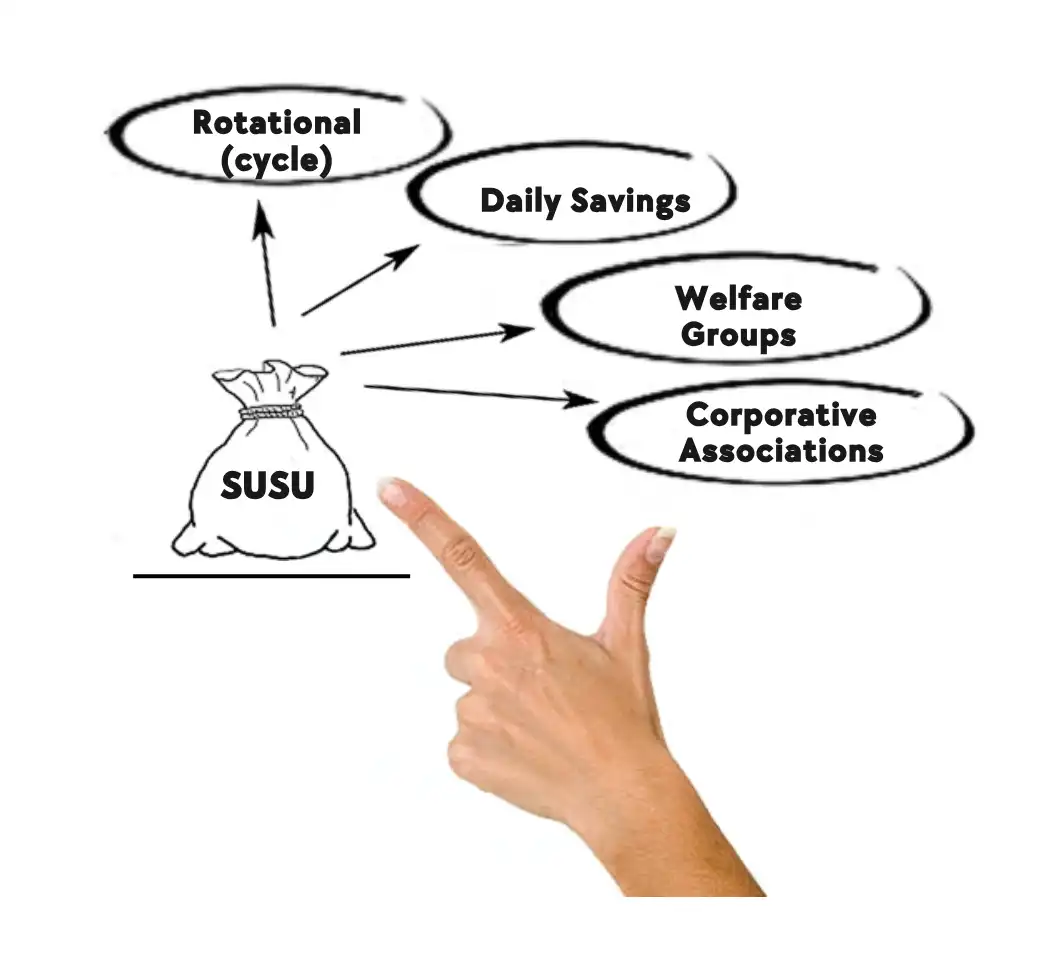
1. Rotating Susu (The "Merry-Go-Round")
How it works: A fixed group of members each contributes the same amount at regular intervals, whether weekly or monthly. Each round, the full pot goes to one member, until everyone has had their turn.
Where you'll find it: Everywhere. Esusu and adashe groups in Nigeria, chamas in Kenya, and friends-and-colleagues susu circles in Ghana often work this way.
What it demands from the manager: A clear payout order, accurate records of who has contributed each round, and the confidence that nobody is skipped or shortchanged. When the group grows, keeping track of every round by hand becomes harder.
2. Daily Susu Collection (The Collector Model)
How it works: A susu collector, sometimes called a susu vendor or, in Nigeria, an alajo, visits clients, often traders and small business owners, to collect a small amount every day. At the end of a cycle, usually a month, the collector returns the client's savings, commonly keeping a small agreed portion (often one day's contribution) as a service fee.
Where you'll find it: Markets, lorry parks and neighbourhoods across Ghana and Nigeria.
What it demands from the manager: This is the most record-heavy model. With dozens or even hundreds of clients paying daily, one missed entry affects someone's savings. Collectors need fast daily recording, clear client balances and accurate end-of-cycle payouts.
3. Savings and Target Susu
How it works: Members save regularly toward a goal such as school fees, rent, festive-season expenses, business stock or a big purchase. There's no rotation. Each member's money is held and returned at a set time, or when the target is reached.
Where you'll find it: Ghana, Nigeria and across Africa, especially among traders and salaried workers building a financial cushion.
What it demands from the manager: Individual tracking for every member, since each saves their own amount toward their own goal, plus clear withdrawal and payout records.
4. Susu With Lending
How it works: Beyond collecting savings, the group or the collector lends money to members, who repay with agreed terms. Some chamas and cooperative groups work this way, and many collectors extend small loans to trusted clients.
Where you'll find it: Ghana, Nigeria, Kenya, Uganda, Tanzania and beyond, particularly where susu has grown into a small financial business.
What it demands from the manager: On top of contributions, you need to track loans, repayments and balances. Mixing these up in a notebook is where money gets lost and disagreements start.
5. Group and Cooperative Savings Associations
How it works: Larger, more structured groups such as cooperatives, village savings and loan associations, stokvels and investment clubs pool funds for savings, shared purchases, investments or mutual support. They often have leaders, rules and regular meetings.
Where you'll find it: South Africa's stokvels, Kenya's chamas, East Africa's village savings groups and cooperatives in Nigeria and Ghana.
What it demands from the manager: Member records, contribution tracking and transparency, because members of larger groups expect to see how funds are handled.
6. Welfare Susu (Support and Mutual Aid Funds)
How it works: Members pay regular dues into a shared welfare fund. The money isn't saved per person or passed around in turns. It is there to support members when life events happen, such as a bereavement, wedding, childbirth or illness, and the group pays out according to its rules.
Where you'll find it: Church groups, workplace associations, family unions and alumni or hometown associations across Ghana, Nigeria and the rest of Africa.
What it demands from the manager: Clear records. You need to track every member's dues, spot who is behind, record each payout and its reason, and always know the fund's balance. Clear records answer "where did the money go?" and keep the group's trust.
Why the Type Matters When Choosing Software
A rotating group and a daily collector may both be called "susu," but their day-to-day needs are very different. One revolves around rounds and payout order. The other revolves around hundreds of small daily entries and end-of-cycle settlements.
Generic tools like spreadsheets or note apps treat these the same, and that's where frustration begins. You end up building your own system, fixing formulas and working around things that were never designed for susu.
Software built specifically for susu operations avoids that problem, and that's exactly why Susu-CRM takes a different approach.
How Susu-CRM Matches Your Platform to Your Susu Type
Susu-crm is built with different platform types designed around the different ways susu is run. Instead of squeezing every operation into one fixed layout, you choose the susu type that matches your operation when you sign up.
Here's how simple it is:
- Go to susu-crm.com and start your signup.
- Select the susu type you operate with in the process. Choose the one that best describes how you run your susu.
- You will be given a platform suited to your operation once you login.
You are not forced to adapt to the software. The software adapts to you.
Not Sure Which Type You Run? We'll Help You Choose
Many susu operations don't fit neatly into one box. Maybe you collect daily and also lend. Maybe you run a rotating group that is also growing into a savings association. That's completely normal.
If you're unsure which type to select, just reach out to our support team via Whatsapp. Tell us how your susu works, and we'll guide you to the platform that suits your operation best.
It takes the guesswork out of getting started, so you begin on the right footing.
And remember, you can start with Susu-CRM's free plan, which never expires. Explore the platform at your own pace, and upgrade to a subscription only when you are ready. It's especially good for startup susu managers and small groups who want to go digital without spending money upfront.
Run Your Susu the Way You Actually Run It
Your susu is unique, shaped by your members, your community and the way you've built trust over time.
Whether you are a market-side collector in Ghana, an esusu organizer in Lagos, in Nairobi, or anywhere, there is a way to manage your susu digitally that fits your operation.
👉 Sign up free at susu-crm.com, select your susu type and get started today
Not sure which to choose? Reach out to our team and we'll point you to the right platform.